
Winter Training, Isolation, and Why Community Matters
Winter Miles, Shared Together
Winter in Wisconsin has always felt a little quieter to me.
The days shorten, the wind sharpens, and the barn—while still full of horses—can feel surprisingly empty. Training continues, often with even more intention and focus. And I’ll be honest: I do love parts of winter. I love the quiet. I love the uninterrupted time in communion with my horses. I love the simplicity of work, routine, and deep focus when the outside world slows down.
That kind of solitude can be grounding. It’s part of why many of us were drawn to horses in the first place.
But there’s a difference between restorative solitude and slowly closing ourselves off—and winter has a way of blurring that line if we’re not paying attention.
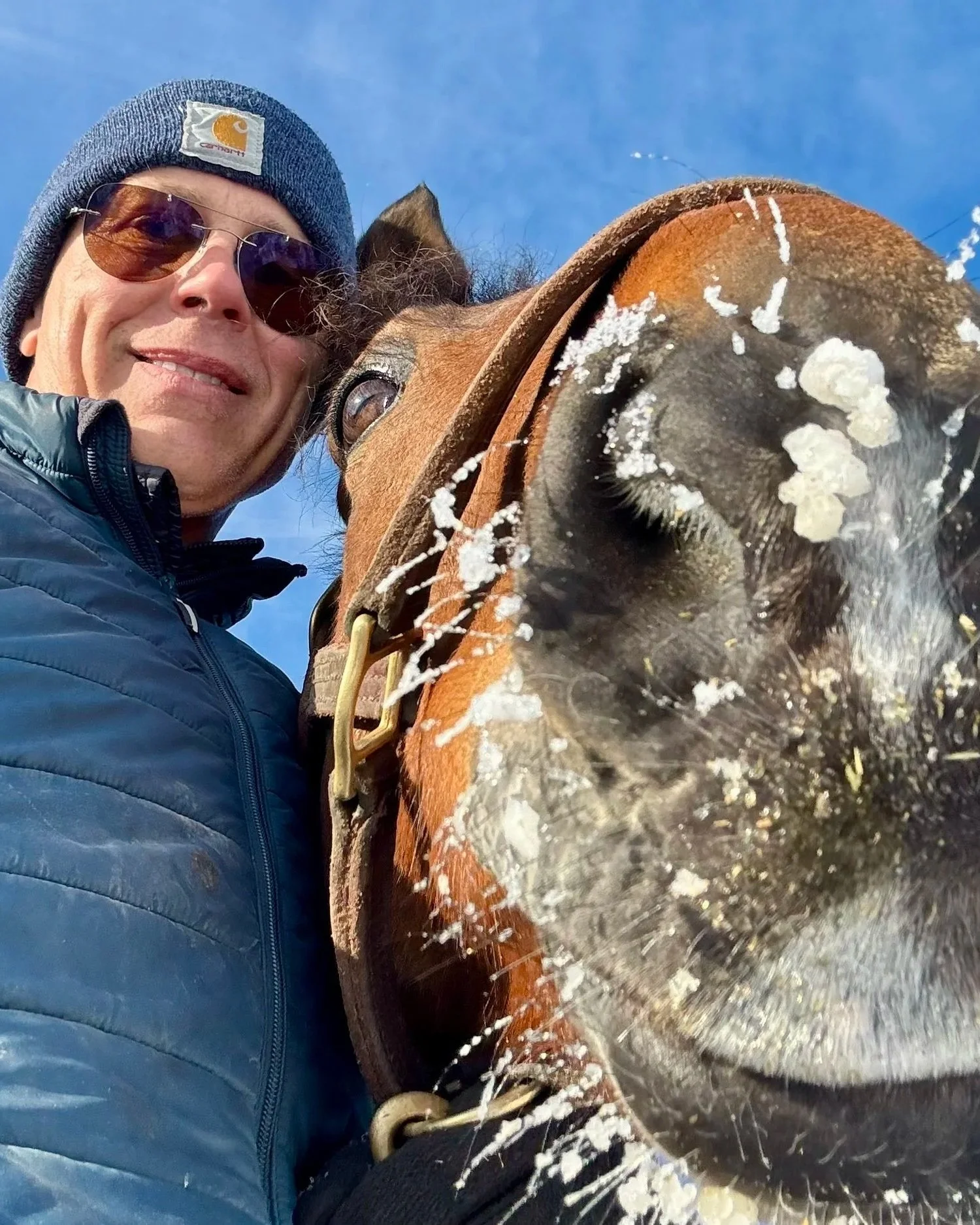
When Solitude Becomes Isolation
I’ve felt it happen.
I ride more alone. I linger less after chores. Conversations get shorter. Before I realize it, I’m relying more on screens than on people—not because I don’t value community, but because isolation can quietly become comfortable.
Winter isolation rarely announces itself. It shows up subtly.
It’s missing the person who usually watches a ride and offers a simple, grounding comment.
It’s carrying frustrations silently instead of talking them through.
It’s learning alone instead of learning together.
Solitude feeds focus—but isolation slowly drains perspective.
Why Being Together Still Matters
Our sport has always been built face to face. Long before livestreams and social media, knowledge was passed down by watching, listening, and sharing space. The rail, the aisleway, the tack trunk—these were classrooms.
When I spend time with other horse people in person, I notice how much it steadies me. I’m more patient. I see my training more clearly. I remember that challenges are part of the process, not personal shortcomings.
Mental health and sport health are deeply connected. Riders who feel supported stay engaged. Horses ridden by grounded, supported riders benefit. A connected community is a resilient one.
Our Horses Feel the Difference
Horses are incredibly perceptive. They feel our internal state long before we’re aware of it ourselves.
When I become too inward or mentally overloaded, it shows up in my riding—my timing, my breathing, my expectations. The more isolated I become, the less communicative I often am, not just with other riders, but with my horses.
Good riding is a conversation. Conversations require presence. Presence is easier when we are supported, seen, and grounded.
Winter Is When Community Matters Most
Winter doesn’t have to be something we simply endure.
This is when intentional connection matters most. Events like the IDCTA Awards Banquet remind me that our efforts matter and that we’re part of something larger than our individual programs.
Opportunities such as the IDCTA Virtual Dressage Shows also play an important role during the winter months. They give us a reason to stay engaged with our training, to set goals, and to feel connected to the broader community—even when weather or distance makes in-person showing difficult. Knowing others are riding, submitting, and working toward the same standards helps bridge the seasonal gap.
Gatherings like the Stonehedge Farm Lecture and Movie Night create space for learning and conversation when we need it most. Sitting together, watching footage, sharing ideas, and talking horses turns winter into a season of reflection rather than retreat.
I’m also grateful for the IDCTA library of live stream educational videos, which allows us to keep learning throughout the colder months. These resources are incredibly valuable—but I believe they’re most powerful when they support, rather than replace, real interaction. Watching together, discussing afterward, or using them as a springboard for conversation helps keep education human and connected.
Staying Open While Honoring Solitude
I don’t believe we need to give up our quiet winter work. In fact, that time alone with our horses can be deeply meaningful and necessary.
But we do need to stay aware.
We can protect our solitude without closing ourselves off. We can work deeply and stay connected. We can choose moments of gathering that refill us rather than drain us.
Some simple objectives can make a real difference:
Watching and supporting one another’s rides
Participating in virtual shows as a shared experience, not a solitary one
Attending lectures, banquets, and educational nights—even when it’s cold
Using livestream content as shared learning, not just individual consumption
Starting conversations at the barn, not only online
Creating spaces where questions, struggles, and growth are welcomed
Arriving at Spring Grounded, Not Isolated
Spring will come. It always does.
How we arrive there depends on how we move through winter. If we close ourselves off completely, we risk burnout and disconnection. If we stay intentionally open, we arrive grounded, motivated, and supported.
Our horses feel the difference. Our barns feel the difference. Our sport feels the difference.
For me, winter is a reminder that while solitude feeds the work, community sustains the horse person doing it. And that’s something worth protecting—together.