"What's Behind Your Aid?"
Being Intentional in the Midst of Adversity
“What are your intentions?”
It’s a simple question, yet one that deserves continual reflection.
Our intentions are rarely fixed. They drift. What begins as service can slowly become self-preservation. What begins as curiosity can become the pursuit of recognition. Even the desire to help can quietly become the desire to control.
Adversity has a way of exposing this.
Pressure doesn’t create character nearly as much as it reveals it.
When circumstances become uncomfortable, our intentions are tested. We begin asking less, “What is best?” and more, “How do I make this feeling stop?”
That shift changes everything.
What Is an Aid?
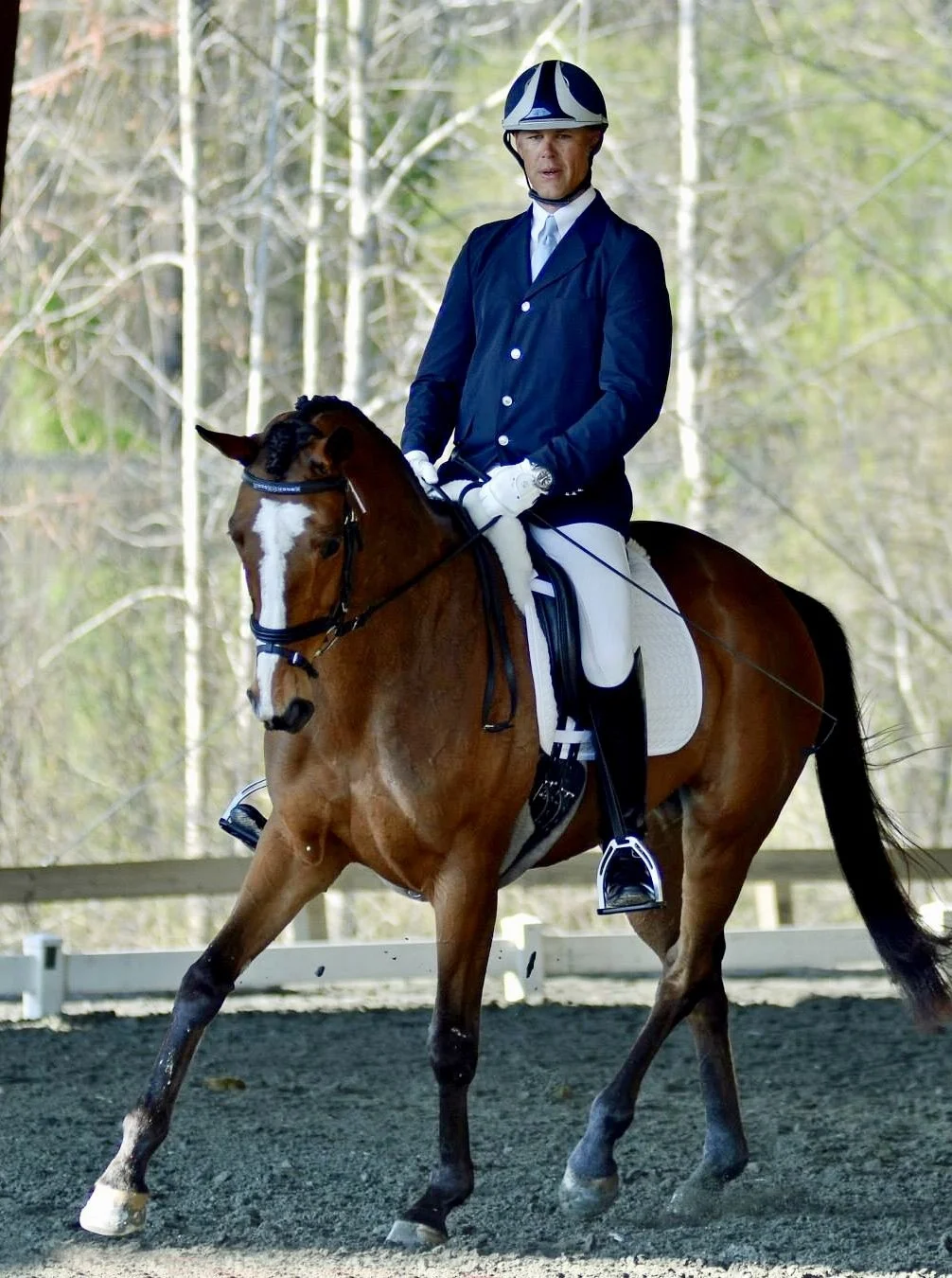
In horsemanship, an aid is simply a means of communication.
Our hands, legs, seat, voice, posture, eyes—even our breathing—are constantly telling the horse something.
Artificial aids such as spurs or a whip are not meant to replace natural communication. They simply extend it when greater clarity is required.
But here’s the interesting part.
Two riders can apply the exact same pressure and receive completely different responses.
Why?
Because the horse is responding to far more than the physical aid.
It is responding to the intention behind it.
Pressure Is Not the Problem
Pressure often gets a bad reputation.
Yet life itself is pressure.
Gravity is pressure. Muscles grow through pressure. Faith matures through pressure. Relationships deepen through pressure.
The question isn’t whether pressure exists.
The question is: What purpose does the pressure serve?
Does it create fear?
Or does it create understanding?
What Do We Really Want?
When we ask for a transition, a lateral movement, or a jump, what is it we’re truly seeking?
Obedience?
Submission?
Or partnership?
If my goal is simply to make the horse comply, my aids become something to escape.
If my goal is partnership, my aids become information.
Pressure is no longer punishment.
It becomes guidance.
Supporting Versus Carrying
One of the greatest mistakes riders make is believing success is measured by how much they do.
In reality, successful riding is often measured by how little we need to do.
A horse that constantly requires holding, pushing, steering, and correcting is dependent on the rider.
A horse that understands the exercise begins carrying itself independently.
The rider shifts from carrying the horse to supporting the horse.
There is a profound difference.
The Highest Form of Horsemanship
The goal isn’t to ride a horse that is constantly on the aids.
The goal is to develop a horse that carries itself between the aids.
The aids simply define the boundaries.
Within those boundaries, the horse discovers balance, confidence, and responsibility.
Just as good parents eventually give less instruction, good teachers give fewer answers, and good leaders exercise less control, the greatest riders ultimately use fewer aids.
Not because they’ve become passive,
but because they’ve become understood.
What’s Behind Your Aid?
Perhaps this question extends beyond riding.
Every conversation. Every correction. Every leadership decision. Every relationship.
What is behind my aid?
Am I asking because I need to feel in control?
Or because I genuinely want to develop another?
Horses have an extraordinary ability to reveal what we often hide from ourselves.
They don’t simply respond to pressure.
They respond to the heart that applies it.
And maybe that’s why horsemanship has so much to teach us.
The quality of our partnership is rarely determined by the aid itself—
but by the intention behind it.
Eric G. Dierks